How Do You Know a Roof Needs Emergency Tarping Right Now?
If water is already getting into the house, or the next rain will reach the roof deck, the roof needs a tarp before that rain arrives, not after the adjuster visits. Damage that calls for a tarp usually falls into a few specific patterns, and each one tells you something about how far the water has already traveled.
- Missing shingles exposing bare felt or roof decking
- Fresh ceiling stain spreading after a storm
- Tree limb puncture through the roof surface
- Lifted ridge cap or torn hip shingles
- Daylight visible through attic roof boards
How Long Can Exposed Felt or Decking Go Without a Tarp After Shingles Blow Off?
Bare felt buys you very little time, often just a rain or two. Bare decking buys you even less. Standard felt underlayment is made to sit under shingles, not to take direct sun and wind, so once it's exposed it tears along the nail lines and soaks through. Plywood and OSB decking absorb water at the edges, then swell and delaminate, and OSB loses strength especially fast when wet. If a tarp goes on within a day or two, the area usually needs only new underlayment and shingles. If the decking sits wet through several rains, it often has to be cut out and replaced before that section can be reroofed.
Does a Fresh Ceiling Stain Mean the Leak Is Right Above It?
Usually not, which is why tarping only the area above the stain so often fails. Water entering at a damaged spot runs along the rafters, the top of the decking, or the attic insulation before it drips, so the stain can appear several feet downslope from the actual opening. A good crew traces that path from inside the attic, looking for wet framing and darkened wood, then tarps from the true entry point up and over the ridge. While you wait, press gently on the drywall around the stain. A soft or sagging ceiling is holding water and can come down without warning.
What Does Tarping Involve When a Tree Limb Has Punctured the Roof?
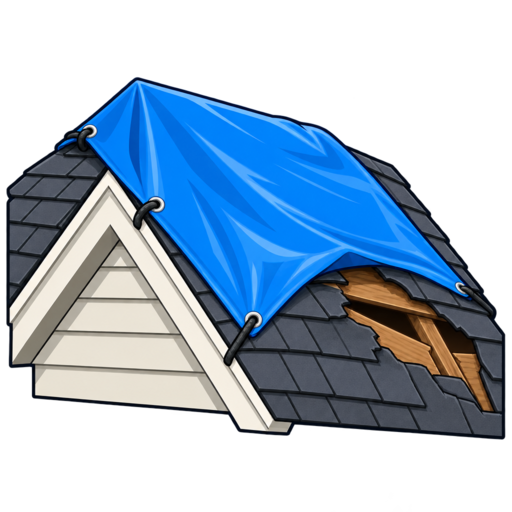
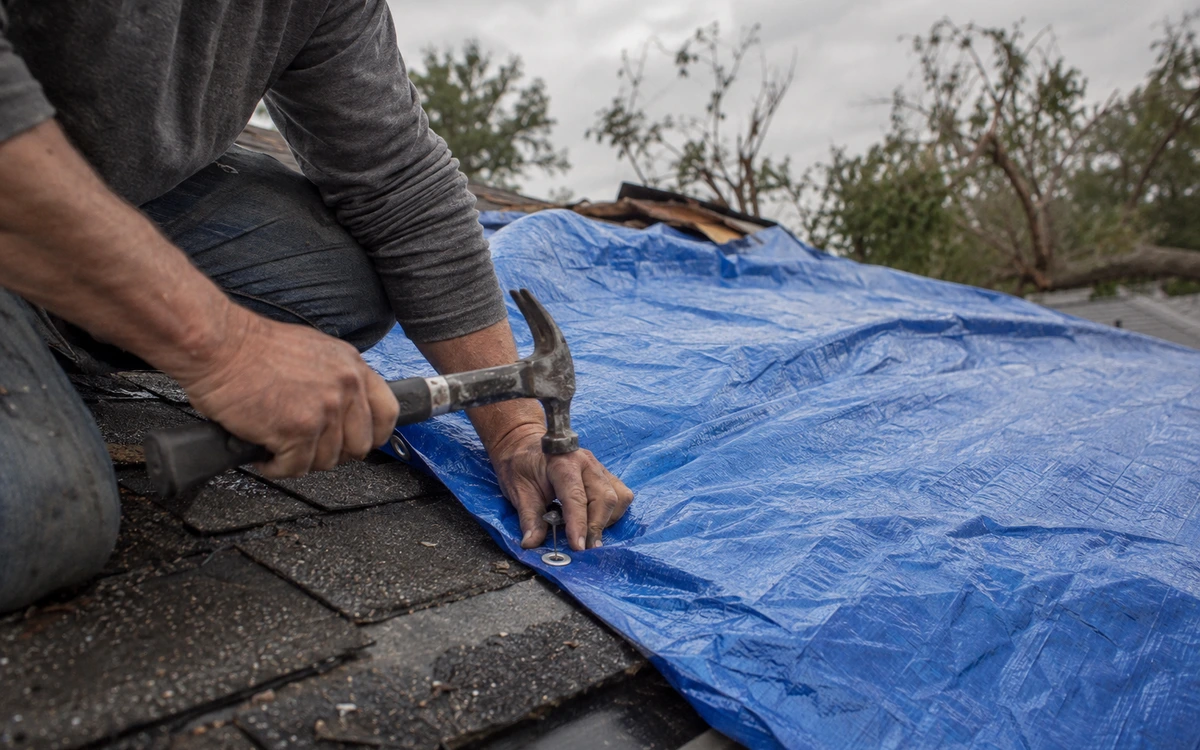
The limb comes off first. A tarp laid over a branch still lodged in the roof will be shredded by the next gust. With the weight removed, the crew checks for cracked rafters or trusses, because a puncture that looks small from the ground can hide a broken framing member under the decking. If the hole is large, they screw plywood over it so the tarp has a solid surface and won't sag into a bowl that collects water. The tarp is then fastened through wood battens into the framing. If a truss is cracked, keep the room below closed off until a carpenter has inspected it.
Is a Lifted Ridge Cap Too Minor to Need a Tarp?
No. The ridge sits at the peak, and wind-driven rain gets pushed straight through the ridge vent opening into the attic, sometimes along the entire length of the house. Ridge caps lift when wind works the nails loose, and once one cap or hip shingle folds back, the next storm tends to peel the pieces beside it. A ridge tarp has to drape down both slopes and be battened on each side, since any loose edge at the peak will catch the wind. Check the attic insulation along the ridge line as well. Wet insulation loses most of its insulating value and holds moisture against the framing.
Why Does Daylight Through the Attic Boards Matter if Nothing Is Dripping Yet?
Any gap that lets light through will let water through. The only reason nothing is dripping yet is that the rain hasn't come from the right direction. Light typically shows at cracked boards, at nail holes where shingles tore away, or at seams where the decking has separated, even when the roof looks nearly intact from the ground. Mark every bright spot from inside before anyone goes up, so the tarp covers all of them, not just the one you happened to notice. Once the tarp is fastened, go back into the attic during daylight and look again. Any light still showing means the coverage or the edge seal needs work.
How Much Does Emergency Roof Tarping Cost in Perth Amboy, NJ?
Emergency roof tarping in Perth Amboy, NJ typically costs $330 to $1,913 per storm call. The two biggest factors are how much of the roof needs covering and how steep the pitch is. Patching a few missing shingles on a walkable roof falls near the low end, while tarping a steep two-story roof from ridge to eave lands near the top. Expect to pay more for night or weekend callouts, plywood over a limb puncture, or clearing debris before the tarp goes on.